ORIGINAL ARTICLE
Motivation and readiness to quit smoking tobacco among healthcare students
1
Institute of Nursing and Midwifery, Faculty of Health Sciences, Jagiellonian University Medical College, Krakow, Poland
Submission date: 2026-01-20
Final revision date: 2026-03-31
Acceptance date: 2026-04-26
Online publication date: 2026-09-22
Corresponding author
Karolina Borek
Institute of Nursing and Midwifery, Faculty of Health Sciences, Jagiellonian University Medical College, 25 Kopernika St., 31-501 Krakow, Poland
Institute of Nursing and Midwifery, Faculty of Health Sciences, Jagiellonian University Medical College, 25 Kopernika St., 31-501 Krakow, Poland
KEYWORDS
TOPICS
ABSTRACT
Introduction:
Tobacco use remains one of the most serious public health problems worldwide. This addiction continues to affect a significant proportion of the population, including healthcare workers.
Aim:
The objective of this study was to assess the level of motivation and readiness to quit smoking among healthcare students.
Material and methods:
The study involved 135 healthcare students who were tobacco smokers. An original questionnaire and Schneider’s Motivation Test for Smoking Cessation were used to conduct the study.
Results:
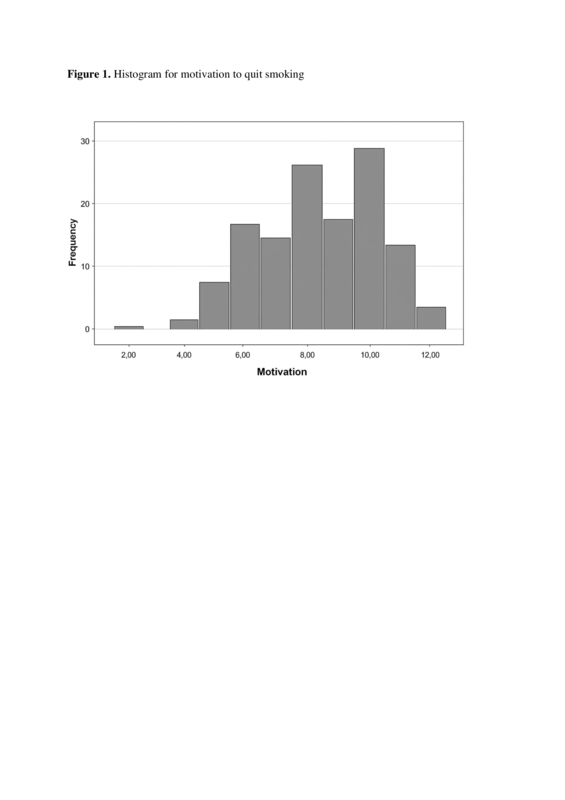
Low motivation to quit smoking was found in one-fifth of the study group (n = 28; 20.7%), while high motivation was found in the majority (n = 107; 79.3%). People under the age of 20 were more likely to have low motivation to quit smoking, while those over the age of 20 had high motivation (42.9% vs. 84.1%, p = 0.002). Respondents who smoked 5 to 10 cigarettes a day had a high level of motivation to fight their addiction, while those who smoked 10–15 cigarettes a day were more likely to have low motivation to quit smoking (61.7% vs. 35.7%, p = 0.031).
Conclusions:
The study group of healthcare students showed a high level of motivation to quit smoking. Significant factors differentiating the level of motivation were age, number of cigarettes smoked per day, and self-assessment of knowledge about the harmful effects of smoking. Interventions supporting healthcare students in quitting smoking and comprehensive education on nicotine dependence and smoking cessation methods should be considered.
Tobacco use remains one of the most serious public health problems worldwide. This addiction continues to affect a significant proportion of the population, including healthcare workers.
Aim:
The objective of this study was to assess the level of motivation and readiness to quit smoking among healthcare students.
Material and methods:
The study involved 135 healthcare students who were tobacco smokers. An original questionnaire and Schneider’s Motivation Test for Smoking Cessation were used to conduct the study.
Results:
Low motivation to quit smoking was found in one-fifth of the study group (n = 28; 20.7%), while high motivation was found in the majority (n = 107; 79.3%). People under the age of 20 were more likely to have low motivation to quit smoking, while those over the age of 20 had high motivation (42.9% vs. 84.1%, p = 0.002). Respondents who smoked 5 to 10 cigarettes a day had a high level of motivation to fight their addiction, while those who smoked 10–15 cigarettes a day were more likely to have low motivation to quit smoking (61.7% vs. 35.7%, p = 0.031).
Conclusions:
The study group of healthcare students showed a high level of motivation to quit smoking. Significant factors differentiating the level of motivation were age, number of cigarettes smoked per day, and self-assessment of knowledge about the harmful effects of smoking. Interventions supporting healthcare students in quitting smoking and comprehensive education on nicotine dependence and smoking cessation methods should be considered.
REFERENCES (19)
1.
Pazdro-Zastawny K, Dorobisz K, Bobak Sarnowska E, Zatoński T. Prevalence and Associated Factors of Cigarette Smoking Among Medical Students in Wroclaw, Poland. Risk Manag Healthc Policy 2022; 15: 509-519.
2.
Alanazi F, Mohamed WJM, Konstantinidis ST, Blake H. Barriers and Facilitators to Smoking Cessation Among University Students: A Scoping Review. Int J Environ Res Public Health 2025; 22(6): 947.
3.
Seven F, Günay T. Tobacco Use Status of Medical Faculty Students and Evaluation of Affecting Factors. Thorac Res Pract. 2024; 25(3): 110-120.
4.
Fischer A, Brodziak-Dopierała B. Palenie tytoniu, używanie marihuany i innych substancji psychoaktywnych przez studentów śląskich uczelni. Przegl Epidemiol. 2021; 75(1): 128-141.
5.
Zhang G, Zhou J, Luk TT, Lam VSF, Yao Z, Wang MP, Cheung YTD. The learning outcomes of smoking cessation training in undergraduate nursing students: a systematic review. Nurse Educ Pract. 2024; 75: 103907.
6.
Surma S, Szyndler A, Narkiewicz K. Świadomość wybranych czynników ryzyka chorób układu sercowo-naczyniowego w populacji młodych osób. Choroby Serca i Naczyń 2017; 14(4): 186-193.
7.
Szklo AS, Martins SR. Smokers who were seen by a doctor or other healthcare provider for any health concern in Brazil: what a missed opportunity to encourage smoking cessation! Public Health. 2023; 225: 176-181.
8.
Ozga-Hess JE, Romm KF, Felicione NJ, Dino G, Blank MD, Turiano NA. Personality and impulsivity as predictors of tobacco use among emerging adults: a latent class analysis. Pers Individ Dif. 2020; 163: 110076.
9.
Bała M, Mejza F, Górecka D. Leczenie uzależnienia od tytoniu. In: Gajewski P, editors. Interna Szczeklika 2018. Kraków: Medycyna Praktyczna; 2018, pp. 885-890.
10.
Wiraszka G, Obierzyńska A. Poziom uzależnienia od nikotyny oraz motywacja do zaprzestania palenia tytoniu wśród młodych dorosłych – studentów regionu świętokrzyskiego. Nurs Public Health. 2019; 9(1): 15-22.
11.
World Medical Association. Deklaracja helsińska Światowego Stowarzyszenia Lekarzy (WMA): etyczne zasady prowadzenia naukowych badań medycznych z udziałem ludzi [Internet]. Med Prakt. 2025 [cited 2025 Oct 14]. Available from: https://www.mp.pl/etyka/medycy....
12.
Xie H, Di X, Liu S, Zeng X, Meng Z, Xiao L. Tobacco use and cessation among college students – China, 2021. China CDC Wkly. 2022; 4(21): 448-451.
13.
Romero-López AM, Portero-de-la-Cruz S, Vaquero-Abellán M. Effectiveness of a web platform on university students’ motivation to quit smoking. Rev Lat Am Enfermagem. 2020; 28: e3318.
14.
Rzepakowska A, Marcinkiewicz B, Żurek M, Wiśniewska D, Niemczyk K. Motivation to smoking cessation in head and neck cancer and dysplasia patients in confrontation with the attitudes of otorhinolaryngologists in delivering anti-smoking therapies. Eur Arch Otorhinolaryngol. 2022; 279(7): 3645-3655.
15.
VanFrank B, Malarcher A, Cornelius ME, Schecter A, Jamal A, Tynan M. Adult smoking cessation – United States, 2022. MMWR Morb Mortal Wkly Rep. 2024; 73(29): 633-641.
16.
Butler KM, Ickes MJ, Rayens MK, Wiggins AT, Ashford K, Hahn EJ. Intention to quit smoking and polytobacco use among college student smokers. Prev Med Rep. 2018; 10: 72-75.
17.
Arancini L, Borland R, Le Grande M, Mohebbi M, Dodd S, Dean OM, Berk M, McNeill A, Fong GT, Cummings KM. Age as a predictor of quit attempts and quit success in smoking cessation: findings from the International Tobacco Control Four-Country survey (2002-14). Addiction 2021; 116(9): 2509-2520.
18.
Oh H, Boo S. A cross-sectional study on factors affecting the intention to quit smoking among female call centre employees. Nurs Open. 2023; 10(8): 5711-5719.
19.
Sun S, Yu H, Ling J, Yao D, Chen H, Liu G. The influence of health literacy and knowledge about smoking hazards on the intention to quit smoking and its intensity: an empirical study based on the data of China’s health literacy investigation. BMC Public Health. 2023; 23(1): 2355.
Share
RELATED ARTICLE
| eISSN: | 2300-6722 |
| ISSN: | 1899-1874 |

We process personal data collected when visiting the website. The function of obtaining information about users and their behavior is carried out by voluntarily entered information in forms and saving cookies in end devices. Data, including cookies, are used to provide services, improve the user experience and to analyze the traffic in accordance with the Privacy policy. Data are also collected and processed by Google Analytics tool (more).
You can change cookies settings in your browser. Restricted use of cookies in the browser configuration may affect some functionalities of the website.
You can change cookies settings in your browser. Restricted use of cookies in the browser configuration may affect some functionalities of the website.