
ORIGINAL ARTICLE
Attitudes toward futile therapy among nurses and non-medically educated participants: potential benefits of a simple educational intervention in a randomized controlled study
1
Powiślańska Academy of Applied Science, Kwidzyn, Poland
2
Department of Anaesthesiology and Intensive Care, Ceynowa Specialist Hospital, Wejherowo, Poland
3
Department of Anaesthesiology and Intensive Care, Faculty of Medicine, Collegium Medicum, University of Warmia and Mazury, Olsztyn, Poland
4
Clinical Department of Anaesthesiology and Intensive Care, Regional Specialist Hospital, Olsztyn, Poland
5
Klinika-Hospital Zum Heiligen Geist, Fritzlar, Germany
6
Medical student, Medical University of Gdańsk, Poland
7
Alarm Clock Clinic, Coma Recovery and Neurorehabilitation Center, Warszawa, Poland
Submission date: 2025-09-26
Final revision date: 2026-03-09
Acceptance date: 2026-03-10
Online publication date: 2026-08-17
Corresponding author
KEYWORDS
TOPICS
ABSTRACT
Introduction:
Futile therapy should be understood as treatment that prolongs dying, increases suffering, but for which the clinical goal cannot be met. People differ in their attitudes toward this issue.
Aim:
The aim of this study was to determine whether stress coping strategies affect the way people understand topics related to futile therapy and whether a simple educational intervention could be beneficial.
Material and methods:
Non-medically educated participants (n = 117) and non-ICU nurses (n = 46) took part in the study. The Brief COPE questionnaire was used to assess coping strategies. Non-medically educated participants were randomized to the study and control groups. A slide with written information about futile therapy was presented to participants in the study group. Subsequently, all participants completed a short survey consisting of three questions. They were asked whether they would expect intensive treatment of a loved one until the end, whether they believed that refraining from certain therapies may be beneficial for the patient, and whether they agreed that futile therapy exists.
Results:
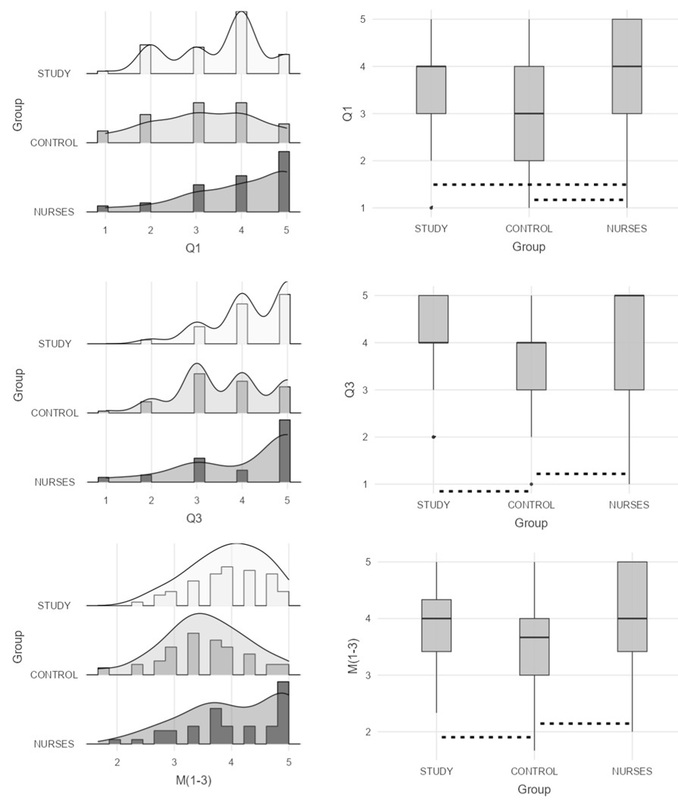
Nurses presented the highest level of understanding of the topic. Nurses with a higher level of problem-focused coping tended to understand the futile therapy better (positive correlation, r = 0.44; p = 0.002), whilst dysfunctional stress coping strategy correlated negatively (r = –0.32; p = 0.03). The control group represented the lowest level of understanding. Higher education was associated with better understanding among non-medically educated participants.
Conclusions:
A relatively simple intervention may significantly increase the understanding of futile therapy related topics among non-medically educated participants. It is worth explaining to relatives the nature of the issue in order to potentially improve communication.
Futile therapy should be understood as treatment that prolongs dying, increases suffering, but for which the clinical goal cannot be met. People differ in their attitudes toward this issue.
Aim:
The aim of this study was to determine whether stress coping strategies affect the way people understand topics related to futile therapy and whether a simple educational intervention could be beneficial.
Material and methods:
Non-medically educated participants (n = 117) and non-ICU nurses (n = 46) took part in the study. The Brief COPE questionnaire was used to assess coping strategies. Non-medically educated participants were randomized to the study and control groups. A slide with written information about futile therapy was presented to participants in the study group. Subsequently, all participants completed a short survey consisting of three questions. They were asked whether they would expect intensive treatment of a loved one until the end, whether they believed that refraining from certain therapies may be beneficial for the patient, and whether they agreed that futile therapy exists.
Results:
Nurses presented the highest level of understanding of the topic. Nurses with a higher level of problem-focused coping tended to understand the futile therapy better (positive correlation, r = 0.44; p = 0.002), whilst dysfunctional stress coping strategy correlated negatively (r = –0.32; p = 0.03). The control group represented the lowest level of understanding. Higher education was associated with better understanding among non-medically educated participants.
Conclusions:
A relatively simple intervention may significantly increase the understanding of futile therapy related topics among non-medically educated participants. It is worth explaining to relatives the nature of the issue in order to potentially improve communication.
REFERENCES (38)
1.
Choi HR, Ho MH, Lin CC. Futile life-sustaining treatment in the intensive care unit – nurse and physician experiences: meta-synthesis. BMJ Support Palliat Care. 2024; 14(1): 36-46. DOI: 10.1136/spcare-2023-004640.
2.
Gorji RM, Mojarrad FA, Kamali M, Ghaffari S, Jafari H. Factors related to futile care and its consequences in intensive care units: a narrative review. J Nurs Rep Clin Pract. 2024. DOI: 10.32598/JNRCP.2403.1056.
3.
Szczeklik W, Krajnik M, Pawlikowski Jk, Szeroczyńska M, Gajewski P, Kotlińska-Lemieszek A, Aszyk P, Muszala A, Imiela J, Imiela T, Górka J, Kübler A, Owczuk R, Duława J. Zapobieganie terapii daremnej u dorosłych chorych umierających w szpitalu – stanowisko Grupy Roboczej Towarzystwa Internistów Polskich ds. Terapii Daremnej na Oddziałach Internistycznych: Część 1: chory umierający nieubezwłasnowolniony, niebędący w stanie podejmować świadomych decyzji co do leczenia w sytuacji daremności medycznej stosowanej terapii. Med Prakt. [Internet] 2023; 121-140. Available from: https://www.mp.pl/ksiegarnia/p....
4.
Kesecioglu J, Rusinova K, Alampi D, Arabi YM, Benbenishty J, Benoit D, Boulanger C, Cecconi M, Cox C, van Dam M, van Dijk D, Downar J, Efstathiou N, Endacott R, Galazzi A, van Gelder F, Gerritsen RT, Girbes A, Hawyrluck L, Herridge M, Hudec J, Kentish-Barnes N, Kerckhoffs M, Latour JM, Malaska J, Marra A, Meddick-Dyson S, Mentzelopoulos S, Mer M, Metaxa V, Michalsen A, Mishra R, Mistraletti G, van Mol M, Moreno R, Nelson J, Suñer AO, Pattison N, Prokopova T, Puntillo K, Puxty K, Qahtani SA, Radbruch L, Rodriguez-Ruiz E, Sabar R, Schaller SJ, Siddiqui S, Sprung CL, Umbrello M, Vergano M, Zambon M, Zegers M, Darmon M, Azoulay E. European Society of Intensive Care Medicine guidelines on end of life and palliative care in the intensive care unit. Intensive Care Med. 2024; 50: 1740-1766.
5.
Kocańda K, Zwierzchowska A, Bączek M. Persistent therapy in the light of case law and literature in the aspect of the patient’s rights and the physician’s corresponding obligations. Folia Cardiol. 2021; 16(4): 281-284.
6.
Kübler A, Siewiera J, Durek G, Kusza K, Piechota M, Szkulmowski Z. Guidelines regarding the ineffective maintenance of organ functions (futile therapy) in ICU patients incapable of giving informed statements of will. Anaesthesiol Intensive Ther. 2014; 46: 229-234.
7.
Bartkowska-Śniatkowska A, Byrska-Maciejasz E, Cettler M, Damps M, Jarosz K, Mierzewska-Schmidt M, Migdał M, Ożóg-Zabolska I, Piotrowski A, Rawicz M, Świder M, Tałałaj M, Zielińska M. Guidelines regarding ineffective maintenance of organ functions (futile therapy) in paediatric intensive care units. Anaesthesiol Intensive Ther. 2021; 53: 369-375.
8.
Sprung CL, Cohen SL, Sjokvist P, Baras M, Bulow HH, Hovilehto S, Ledoux D, Lippert A, Maia P, Phelan D, Schobersberger W, Wennberg E, Woodcock T; for the Ethicus Study Group. End-of-life practices in European intensive care units: the Ethicus Study. JAMA 2003; 290: 790-797.
9.
Avidan A, Sprung CL, Schefold JC, Ricou B, Hartog CS, Nates JL, Jaschinski U, Lobo SM, Joynt GM, Lesieur O, Weiss M, Antonelli M, Bülow HH, Bocci MG, Robertsen A, Anstey MH, Estébanez-Montiel B, Lautrette A, Gruber A, Estella A, Mullick S, Sreedharan R, Michalsen A, Feldman C, Tisljar K, Posch M, Ovu S, Tamowicz B, Demoule A, DeKeyser Ganz F, Pargger H, Noto A, Metnitz P, Zubek L, de la Guardia V, Danbury CM, Szűcs O, Protti A, Filipe M, Simpson SQ, Green C, Giannini AM, Soliman IW, Piras C, Caser EB, Hache-Marliere M, Mentzelopoulos SD; ETHICUS-2 Study Group. Variations in end-of-life practices in intensive care units worldwide (Ethicus-2): a prospective observational study. Lancet Respir Med. 2021; 9: 1101-1110.
10.
Juczyński AZ, Ogińska-Bulik N. Narzędzie pomiaru stresu i radzenia sobie ze stresem. Warszawa: Pracownia Testów Psychologicznych Polskiego Towarzystwa Psychologicznego; 2012.
11.
Carver CS. You want to measure coping but your protocol’s too long: consider the brief COPE. Int J Behav Med. 1997; 4: 92-100.
12.
Cooper C, Katona C, Livingston G. Validity and reliability of the brief COPE in carers of people with dementia: the LASER-AD Study. J Nerv Ment Dis. 2008; 196: 838-843.
13.
The jamovi project (2024). jamovi. (Version 2.6) [Computer Software]. Retrieved from: https://www.jamovi.org.
14.
R Core Team (2024). R: A Language and environment for statistical computing. (Version 4.4) [Computer software]. Retrieved from: https://cran.r-project.org. (R packages retrieved from CRAN snapshot 2024-08-07).
15.
Wintterlin F, Hendriks F, Mede NG, Bromme R, Metag J, Schäfer MS. Predicting public trust in science: the role of basic orientations toward science, perceived trustworthiness of scientists, and experiences with science. Front Commun. 2022; 6: 822757. DOI: 10.3389/fcomm.2021.822757.
16.
Dixson HGW, Komugabe-Dixson AF, Medvecky F, Balanovic J, Thygesen, H, MacDonald, EA. Trust in science and scientists: Effects of social attitudes and motivations on views regarding climate change, vaccines and gene drive technology. J Trust Res. 2022; 12: 179-203.
17.
Ma H, Zou JM, Zhong Y, Li J, He JQ. Perceived stress, coping style and burnout of Chinese nursing students in late stage clinical practice: a cross-sectional study. Nurse Educ Pract. 2022; 62: 103385. DOI: 10.1016/j.nepr.2022.103385.
18.
Meyerson J, Gelkopf M, Eli I, Uziel N. Stress coping strategies, burnout, secondary traumatic stress, and compassion satisfaction amongst Israeli dentists: a cross-sectional study. Int Dent J. 2022; 72: 476-483.
19.
Jin F, Ni S, Wang L. Occupational stress, coping strategies, and mental health among clinical nurses in hospitals: a mediation analysis. Front Public Health. 2025; 13: 1537120. DOI: 10.3389/fpubh.2025.1537120.
20.
Badger JM. A descriptive study of coping strategies used by Medical Intensive Care Unit nurses during transitions from cure- to comfort-oriented care. Heart Lung. 2005; 34: 63-68.
21.
Ferrell BR. Understanding the moral distress of nurses witnessing medically futile care. Oncol Nurs Forum. 2006; 33: 922-930.
22.
Asayesh H, Mosavi M, Abdi M, Masoud MP, Jodaki K. The relationship between futile care perception and moral distress among intensive care unit nurses. J Med Ethics Hist Med. 2018; 11: 2.
23.
Savitsky B, Findling Y, Ereli A, Hendel T. Anxiety and coping strategies among nursing students during the covid-19 pandemic. Nurse Educ Pract. 2020; 46: 102809. DOI: 10.1016/j.nepr.2020.102809.
24.
Huang L, Lei W, Xu F, Liu H, Yu L. Emotional responses and coping strategies in nurses and nursing students during Covid-19 outbreak: a comparative study. PLoS One. 2020; 15: e0237303. DOI: 10.1371/journal.pone.0237303.
25.
Zavotsky KE, Chan GK. Exploring the relationship among moral distress, coping, and the practice environment in emergency department nurses. Adv Emerg Nurs J. 2016; 38: 133-146.
26.
Romero-García M, Delgado-Hito P, Gálvez-Herrer M, Ángel-Sesmero JA, Velasco-Sanz TR, Benito-Aracil L, Heras-La Calle G. Moral distress, emotional impact and coping in intensive care unit staff during the outbreak of COVID-19. Intensive Crit Care Nurs. 2022; 70: 103206. DOI: 10.1016/j.iccn.2022.103206.
27.
Safarpour H, Ghazanfarabadi M, Varasteh S, Bazyar J, Fuladvandi M, Malekyan L. The association between moral distress and moral courage in nurses: a cross-sectional study in Iran. Iran J Nurs Midwifery Res. 2020; 25: 533-538.
28.
Demir M, Håkansson E, Drott J. Nurses’ experiences of moral distress and how it affects daily work in surgical care-a qualitative study. J Adv Nurs. 2024; 80: 2080-2090.
29.
Nielsby U, Dau S, Bruun H, Christensen AS. Moral distress and clinical judgment among newly graduated nurses: a meta-ethnographic literature review. Nurs Ethics. 2025; 32: 1591-1616.
30.
Abdul Halain A, Tang LY, Chong MC, Ibrahim NA, Abdullah KL. Psychological distress among the family members of Intensive Care Unit (ICU) patients: a scoping review. J Clin Nurs. 2022; 31: 497-507.
31.
Pinheiro I, Kohlsdorf M, Pérez-Nebra AR. Analysis of stress and coping in relatives of patients admitted to the ICU. Paidéia (Ribeirão Preto). 2022; 32: e3204. DOI: 10.1590/1982-4327e3204.
32.
Onrust M, Lansink-Hartgring AO, van der Meulen I, Luttik ML, de Jong J, Dieperink W. Coping strategies, anxiety and depressive symptoms in family members of patients treated with extracorporeal membrane oxygenation: a prospective cohort study. Heart Lung. 2022; 52: 146-151.
33.
Tshwaphe T. Stress and coping strategies among family members of patients admitted to the intensive care unit at Princess Marina hospital, Gaborone, Botswana. Doctoral dissertation, The University of Zambia; 2025. https://dspace.unza.zm/items/b....
34.
Saeid Y, Moradian ST, Ebadi A, Salaree MM. The family intensive care unit syndrome: a qualitative content analysis. Nurs Crit Care. 2022; 27: 401-409.
35.
Saeid Y, Ebadi A, Salaree MM, Moradian ST. Development and psychometric evaluation of the family intensive care units syndrome inventory. Brain Behav. 2023; 13: e3101. DOI: 10.1002/brb3.3101.
36.
Vieira JV, Oliveira H, Deodato S, Mendes F. Futile therapeutic nursing interventions in adult intensive care: a descriptive study. Nurs Ethics. 2025; 32(5): 1458-1476.
37.
Muża M, Radkowski P, Grabarczyk Ł. Kantianism, intercultural differences, and attitudes toward organ donation among first-year nursing students. Med Sci Monit. 2026; 32: e950445. DOI: 10.12659/MSM.950445.
38.
Muża M, Frączek Z, Radkowski P, Pietruszewska H, Grabarczyk Ł. Influence of dark triad personality on attitudes toward brain death, organ donation, and futile therapy. Med Sci Monit. 2026; 32: e951956. DOI: 10.12659/MSM.951956.
Share
RELATED ARTICLE
| eISSN: | 2300-6722 |
| ISSN: | 1899-1874 |

We process personal data collected when visiting the website. The function of obtaining information about users and their behavior is carried out by voluntarily entered information in forms and saving cookies in end devices. Data, including cookies, are used to provide services, improve the user experience and to analyze the traffic in accordance with the Privacy policy. Data are also collected and processed by Google Analytics tool (more).
You can change cookies settings in your browser. Restricted use of cookies in the browser configuration may affect some functionalities of the website.
You can change cookies settings in your browser. Restricted use of cookies in the browser configuration may affect some functionalities of the website.
